⚡ From design to development, Skyroots Digital builds brands that connect and convert. ⚡

Shopify Website Design Cost: 7 Best Pricing Factors

Shopify website design cost is one of the first questions business owners ask before building an online store. It makes sense. If you are planning to sell products online, you want to know what you are paying for, what affects the price, and how to avoid spending money on the wrong setup.

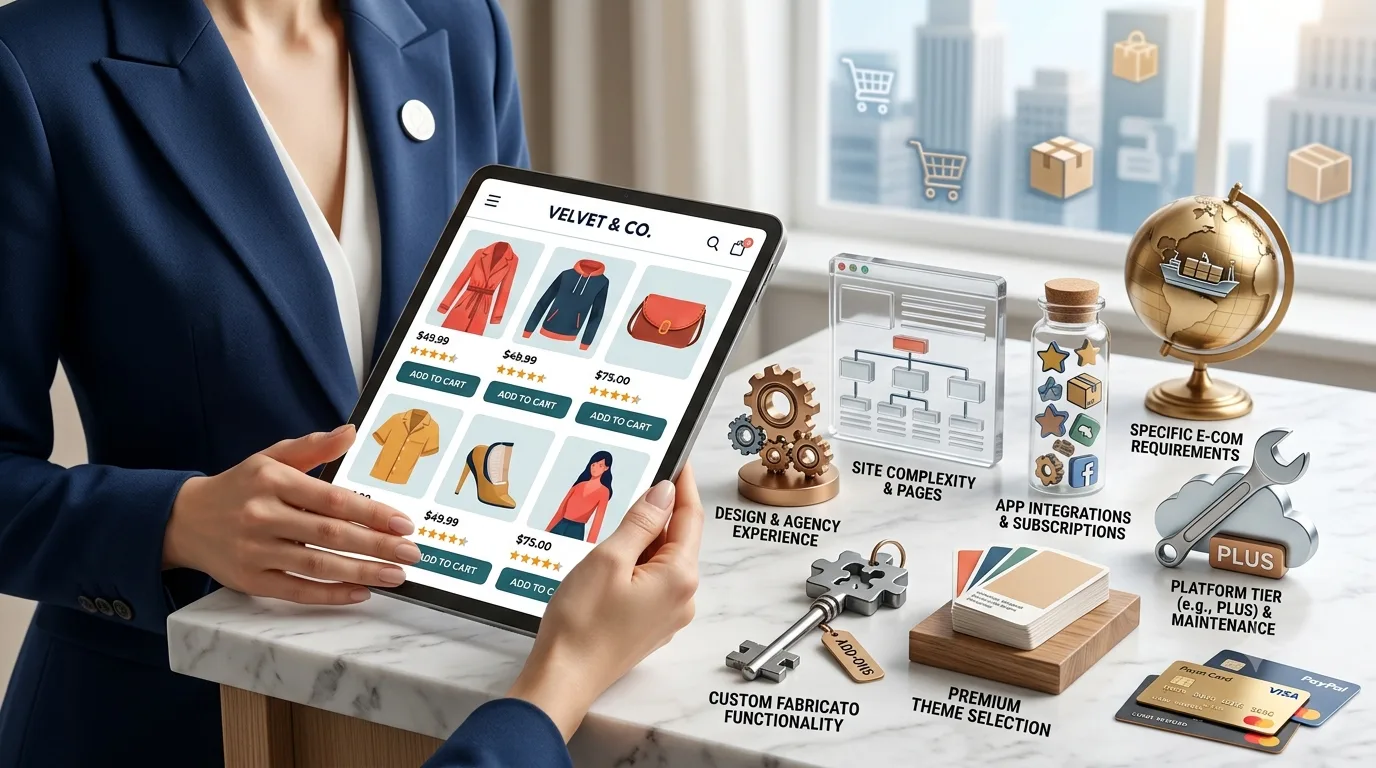
The short answer is that Shopify website design cost depends on the size of your store, the design style, product setup, features, apps, SEO work, and how much custom planning your store needs.

A simple Shopify store with a clean theme and a few products will usually cost less than a custom ecommerce website with collection pages, product filters, custom sections, email marketing setup, speed work, and conversion-focused design.

If you are still choosing the right person for the project, you may also want to read our guide on hiring a Shopify web designer.

Why Shopify Website Design Cost Can Vary

Not every Shopify store is built the same way. Some stores only need a clean homepage, a few product pages, and a simple checkout path. Other stores need custom design, larger product catalogs, advanced apps, SEO planning, and detailed product organization.

This is why Shopify website design cost can feel different from one project to another. You are not only paying for pages. You are paying for planning, design decisions, product setup, user experience, and the work needed to make the store easy to use.

A good Shopify website should help customers do three things quickly:

  • Understand what you sell
  • Trust your store
  • Buy without confusion

If the store looks nice but customers cannot find products, compare options, or complete checkout easily, the design is not doing its job.

1. Store Size and Number of Pages

The size of your store is one of the biggest factors in Shopify website design cost. A small store with a few products is easier to plan and build than a larger store with many products, categories, and collections.

A basic Shopify store may include:

  • Homepage
  • About page
  • Contact page
  • Shop page
  • Product pages
  • Basic policy pages

A larger Shopify website may need more detailed pages, such as:

  • Collection pages
  • Product category pages
  • Landing pages
  • FAQ page
  • Size guide page
  • Shipping information page
  • Returns page
  • Blog section

The more pages and product sections your store needs, the more planning, design, and content work is required.

2. Theme Setup vs Custom Shopify Design

Another major factor is whether your store uses a ready Shopify theme or a more custom design approach.

A theme-based store can be a good option when you need a clean store quickly. The designer can adjust colors, typography, sections, images, and layout to match your brand.

Custom Shopify website design usually costs more because it takes more time. The layout is planned around your brand, products, customer journey, and conversion goals.

Custom work may include:

  • Custom homepage sections
  • Better product page layouts
  • Custom collection page structure
  • Brand-focused visuals
  • More flexible page sections
  • Conversion-focused calls-to-action

If your store needs to look different from a basic template, custom design is usually worth considering. For a deeper look at store layout, read our Shopify website design best practices guide.

3. Product Setup and Store Organization

Product setup can also affect Shopify website design cost. A store with five products is much easier to organize than a store with hundreds of products, variants, sizes, colors, tags, and collections.

Good product setup includes:

  • Clear product titles
  • Helpful product descriptions
  • High-quality images
  • Product categories
  • Variants such as size or color
  • Pricing and inventory settings
  • Shipping details
  • Related product sections

If product pages are rushed, customers may leave with unanswered questions. A strong Shopify product page should make the buying decision easier.

This is one reason Shopify website design cost can increase when a store has many products or needs better product organization.

4. Apps, Features, and Integrations

Shopify apps can add useful features to your store, but they also need proper setup. Some apps are simple. Others need configuration, testing, and design adjustments.

Common Shopify features may include:

  • Product reviews
  • Email signup forms
  • Discount popups
  • Live chat
  • Product filters
  • Wishlist options
  • Subscription products
  • Booking tools
  • Upsell sections
  • Email marketing tools

Each feature should have a purpose. Adding too many apps can slow down the store and make the customer experience messy.

A professional Shopify setup should include only the tools your store actually needs. You can also check Shopify’s official pricing page here: Shopify pricing.

5. Mobile Design and Page Speed

Most ecommerce visitors shop from their phones. If your Shopify store is hard to use on mobile, you can lose sales even if the desktop version looks good.

Mobile-friendly Shopify design should include:

  • Readable text
  • Easy-to-tap buttons
  • Simple navigation
  • Fast loading images
  • Clear product photos
  • Short checkout path
  • Simple menus

Speed is also important. Slow stores can frustrate visitors before they even see your products. Large images, too many apps, heavy scripts, and poorly built sections can all slow down a Shopify website.

When comparing Shopify website design cost, ask if mobile design and speed cleanup are included. A cheap store that loads slowly may cost more later in lost sales and fixes.

6. SEO Setup for Shopify Stores

SEO is another important part of Shopify website design cost. A store should be built so search engines can understand the pages, products, collections, and content.

Basic Shopify SEO setup may include:

  • SEO-friendly page titles
  • Meta descriptions
  • Clean URLs
  • Optimized product titles
  • Image alt text
  • Internal links
  • Collection page content
  • Blog structure
  • Fast loading pages

SEO should not be added at the very end. It should be part of the planning from the start. If you need help with search visibility, explore our SEO service.

A Shopify store with better SEO structure has a stronger chance of getting organic traffic over time.

7. Content, Trust, and Conversion Strategy

Design alone is not enough. Your Shopify store also needs clear content. Customers should understand what you sell, why they should trust you, and what makes your products worth buying.

Helpful store content may include:

  • Clear homepage messaging
  • Product benefits
  • Shipping details
  • Return policy
  • FAQs
  • Reviews
  • Trust badges
  • About brand story
  • Contact information

Conversion strategy also affects Shopify website design cost. A store built for sales should guide people from browsing to buying with clear steps.

Good conversion elements include:

  • Strong hero section
  • Clear product categories
  • Visible add-to-cart buttons
  • Simple checkout flow
  • Trust signals near buying points
  • Helpful product details
  • Related products

A Shopify website should not only look professional. It should help visitors make decisions with confidence.

Cheap Shopify Design vs Professional Shopify Design

Choosing the cheapest option can be tempting, especially for a new store. But a very cheap Shopify setup may miss important details like mobile design, SEO structure, speed, product organization, and conversion planning.

A low-cost store may look fine at first, but later you may need to fix:

  • Slow loading pages
  • Poor mobile layout
  • Weak product pages
  • Confusing navigation
  • Missing SEO setup
  • Too many unnecessary apps
  • Weak calls-to-action

A professional Shopify project focuses on long-term use. The goal is to build a store that is easier to manage, easier to market, and easier for customers to buy from.

How Much Should You Budget?

Instead of asking only for the lowest price, ask what is included in the project. Shopify website design cost should be judged by the value of the setup, not only the final number.

Before starting, ask questions like:

  • Will the store be mobile-friendly?
  • Will product pages be optimized?
  • Will basic SEO be included?
  • Will speed be checked?
  • Will apps be installed properly?
  • Will I be able to edit the store later?
  • Will collection pages be planned?
  • Will there be support after launch?

These questions help you understand whether you are paying for a simple store setup or a complete ecommerce website build.

When Should You Invest More?

You may need a higher budget if your Shopify store has many products, custom branding, advanced features, or a serious growth plan.

Investing more may make sense if:

  • You depend on online sales
  • You sell many products
  • You need custom page sections
  • You want a stronger brand feel
  • You need better SEO structure
  • You plan to run ads
  • You want long-term growth

If your store is only a test idea, a simpler setup may be enough. But if your online store is an important part of your business, better planning can save time and money later.

Final Thoughts

Shopify website design cost depends on your store size, design needs, product setup, apps, SEO, content, speed, and conversion goals. A simple store will cost less than a custom store built for long-term ecommerce growth.

The best approach is to think about what your store needs to do. It should look professional, load fast, work well on mobile, explain products clearly, and make checkout easy.

At Skyroots Digital, we help businesses build Shopify stores that are clean, practical, SEO-friendly, and easy for customers to use.

If you are ready to plan your online store, explore our Shopify development service or contact Skyroots Digital to start your project.

FAQs About Shopify Website Design Cost

What affects Shopify website design cost?

Shopify website design cost depends on store size, custom design, product setup, apps, SEO work, content, mobile design, speed optimization, and the level of planning required.

Is Shopify cheaper than a custom ecommerce website?

Shopify can be more affordable than a fully custom ecommerce platform because it already includes hosting, checkout, product management, and ecommerce tools. The final cost still depends on design and features.

Do I need custom Shopify design?

You may need custom Shopify design if you want a unique brand look, better product pages, stronger conversion sections, or a store that does not feel like a basic template.

Does Shopify website design include SEO?

It depends on the designer or agency. A strong Shopify project should include basic SEO setup such as page titles, meta descriptions, clean URLs, image alt text, product structure, and internal links.

Can I start with a simple Shopify store?

Yes. Many businesses start with a simple Shopify store and improve it over time. The important thing is to build the store with clean structure, mobile-friendly design, and room to grow.

Should I hire a Shopify web designer or do it myself?

You can build a basic Shopify store yourself, but hiring a Shopify web designer can help if you need better design, product organization, SEO setup, speed, and a more professional customer experience.
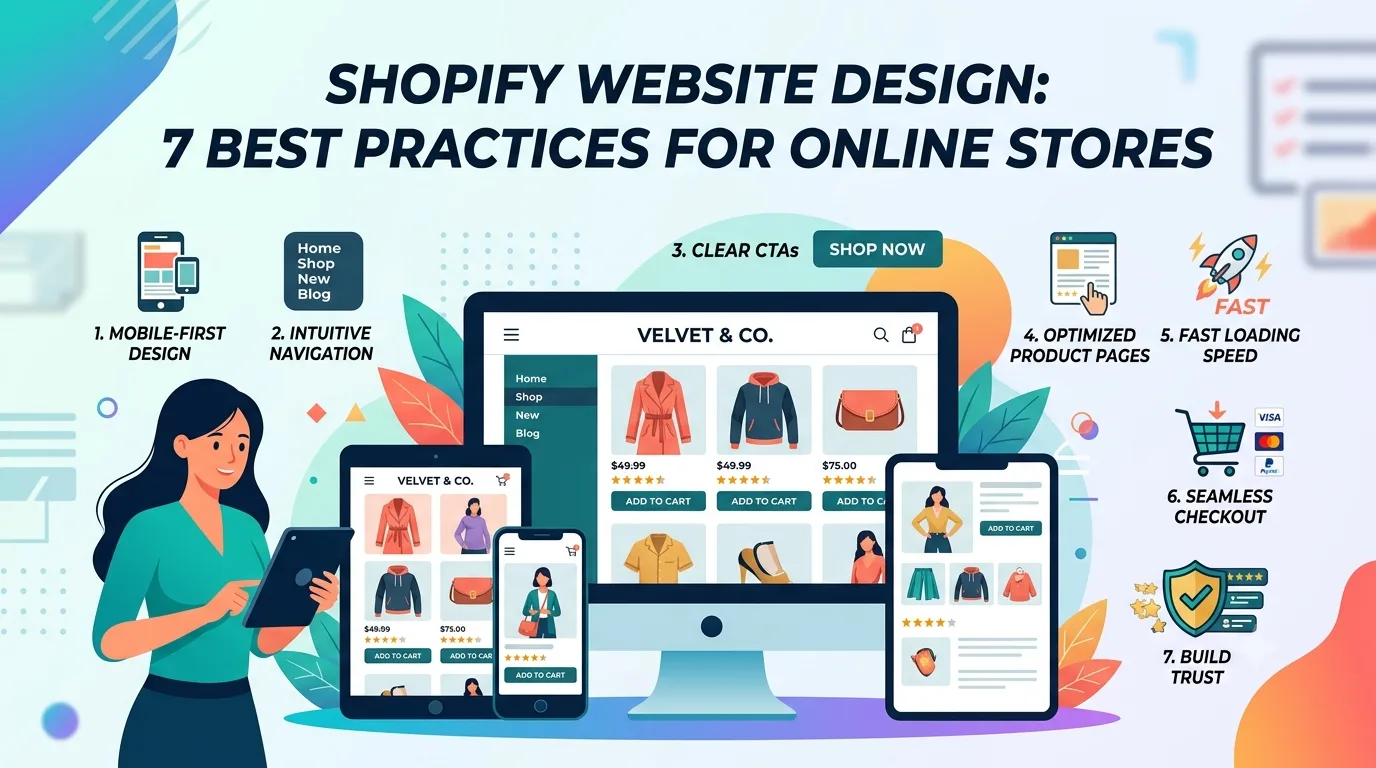

Shopify Website Design: 7 Best Practices for Online Stores

Shopify website design is one of the most important parts of building a successful online store. A Shopify store should not only look clean. It should help shoppers understand products, trust the brand, move through the store easily, and complete checkout without confusion.

Many businesses start with a Shopify theme and upload products, but a strong store needs more planning than that. Layout, product pages, mobile experience, speed, SEO, trust signals, and conversion flow all affect how well the store performs.

If you are planning a new Shopify store or improving an existing one, this guide explains the best Shopify website design practices to follow before launch.

Why Shopify Website Design Matters

A Shopify store is more than a place to list products. It is your online sales experience. If the design is confusing, slow, or hard to use, shoppers may leave before buying.

Good Shopify web design helps visitors:

  • Understand what you sell
  • Find products quickly
  • Trust your brand
  • Compare product options
  • Read important details
  • Add products to cart easily
  • Complete checkout with confidence

A strong Shopify website design should support both user experience and business goals. It should make shopping simple, not stressful.

Start With Clear Store Goals

Before choosing a layout or theme, get clear on what your Shopify store needs to do.

Ask yourself:

  • Am I selling physical products?
  • Do I need collections or product filters?
  • Do I need product variants?
  • Do I need subscriptions?
  • Do I need local pickup or shipping options?
  • Do I want to increase average order value?
  • Do I need SEO traffic from Google?
  • Do I want paid ads to send traffic to product pages?

Your goals affect the store structure. A fashion store may need strong visuals and collection filters. A beauty store may need product education, reviews, and bundles. A furniture store may need detailed specs, image galleries, and shipping information.

If you need help building a complete store, explore our Shopify development service.

1. Build a Clean Homepage

The homepage is often the first place shoppers land. It should explain the brand quickly and guide visitors toward products or collections.

A clean Shopify homepage may include:

  • Clear hero section
  • Simple brand message
  • Featured collections
  • Best-selling products
  • Trust signals
  • Customer reviews
  • Clear calls-to-action
  • Shipping or return information
  • Email signup section

A homepage should not feel crowded. The goal is to help shoppers understand the store and move forward easily.

2. Create Strong Product Pages

Product pages are the heart of every Shopify store. This is where shoppers decide whether to buy.

A strong product page should include:

  • Clear product title
  • High-quality product images
  • Useful product description
  • Price and variant options
  • Size guide or specifications
  • Shipping information
  • Return policy
  • Customer reviews
  • Related products
  • Strong add-to-cart button

Product pages should answer common buying questions before the customer has to ask. If details are missing, shoppers may leave and look somewhere else.

This is also where a Shopify web designer can help organize the page so it feels clear, trustworthy, and easy to use.

3. Design for Mobile Shoppers

Most ecommerce shoppers browse from phones. If your Shopify website design is not mobile-friendly, you can lose sales quickly.

Mobile-friendly Shopify web design should include:

  • Readable text
  • Easy-to-tap buttons
  • Simple mobile menu
  • Fast-loading images
  • Clear product photos
  • Short checkout path
  • Sticky add-to-cart button when useful
  • Simple product filters

A Shopify store should be tested on different screen sizes before launch. A store that looks good on desktop but feels difficult on mobile is not ready.

4. Improve Store Speed

Speed affects both user experience and sales. If a Shopify store loads slowly, shoppers may leave before viewing products.

Store speed can be affected by:

  • Large images
  • Too many apps
  • Heavy theme code
  • Unused scripts
  • Large video files
  • Poorly optimized sections

A good Shopify website design should keep the store clean and lightweight. Use optimized images, avoid unnecessary apps, and choose sections that support the customer journey.

5. Plan SEO Before Launch

Shopify can work well for SEO when the store is structured properly. Search engines need clear product pages, collection pages, headings, titles, descriptions, and internal links.

A strong SEO foundation for Shopify may include:

  • Optimized product titles
  • Clean collection pages
  • Helpful product descriptions
  • Image alt text
  • Clean URLs
  • Internal links
  • Fast loading speed
  • Mobile-friendly layout
  • Blog content
  • Schema markup where needed

SEO should not be added only after the store is built. A search-friendly Shopify website design should consider SEO from the beginning.

You can also review Google’s SEO Starter Guide to understand search-friendly website basics.

6. Use Trust Signals

Online shoppers need confidence before buying. Trust signals help reduce doubt and make the store feel more reliable.

Useful trust signals include:

  • Customer reviews
  • Secure checkout message
  • Clear return policy
  • Shipping information
  • Contact information
  • Real product photos
  • Payment icons
  • FAQs
  • About brand section

A strong Shopify website design places these trust elements where shoppers need reassurance, especially on product pages and checkout-related sections.

7. Make the Checkout Path Simple

A Shopify store should guide shoppers from product discovery to checkout without confusion.

A smooth checkout path may include:

  • Clear product pages
  • Easy add-to-cart button
  • Simple cart page
  • Clear shipping information
  • Visible return policy
  • Easy payment options
  • No unnecessary distractions

The fewer obstacles shoppers face, the better chance they have of completing the order.

Shopify Website Design vs Shopify Development

Shopify website design focuses on layout, branding, product presentation, mobile experience, and conversion flow.

Shopify development focuses more on theme customization, custom sections, app setup, integrations, advanced features, and technical improvements.

Many successful Shopify projects need both. A store should look professional, but it should also work smoothly behind the scenes.

Common Shopify Website Design Mistakes

Many online stores lose sales because of simple design mistakes.

Common mistakes include:

  • Using too many apps
  • Slow loading pages
  • Weak product descriptions
  • Low-quality images
  • Confusing navigation
  • No reviews or trust signals
  • Hard-to-find contact information
  • Poor mobile layout
  • No SEO structure
  • Weak calls-to-action

A good Shopify store should be designed around the shopper, not only around the theme.

Final Thoughts

Shopify website design should help your online store look professional, load fast, work smoothly, and support more sales.

A strong store should have clear product pages, mobile-friendly layouts, SEO-friendly structure, trust signals, and a simple checkout experience.

Skyroots Digital helps businesses build Shopify stores with clean design, strong structure, and conversion-focused planning.

If you are ready to build or improve your Shopify store, contact Skyroots Digital to start your project.

FAQs

What is Shopify website design?

Shopify website design is the process of planning and creating the layout, product pages, mobile experience, branding, navigation, and conversion flow of a Shopify online store.

Why is Shopify website design important?

Shopify website design is important because it affects how shoppers browse products, trust the store, understand product details, and complete checkout.

Is Shopify good for SEO?

Yes, Shopify can work well for SEO when product pages, collection pages, titles, descriptions, image alt text, internal links, and site speed are properly optimized.

What should a Shopify product page include?

A Shopify product page should include strong images, a clear title, useful description, price, variants, shipping information, return policy, reviews, and a clear add-to-cart button.

What is the difference between Shopify web design and Shopify development?

Shopify web design focuses on layout, branding, and user experience. Shopify development focuses on technical work such as custom sections, theme changes, integrations, and advanced features.

Should I hire someone for Shopify website design?

You should consider hiring help if you want a professional store, better product pages, stronger mobile experience, SEO-friendly structure, and a smoother checkout flow.

Shopify Web Designer: 7 Essential Things to Check Before Hiring

Hiring the right Shopify web designer can make a big difference in how your online store looks, works, and sells. Shopify is a strong ecommerce platform, but a successful store needs more than a basic theme and product uploads.

Your store should be easy to browse, fast to load, simple to buy from, and trustworthy. A good Shopify website should help customers find products, understand details, and complete checkout without confusion.

If you need help building a complete Shopify store, explore our Shopify development service.

For store layout and page structure, read our Shopify website design best practices guide.

Why Choosing the Right Shopify Web Designer Matters

Ecommerce design is different from regular website design. A business website may focus on leads and contact forms, but an online store needs to support product discovery, product comparison, cart flow, checkout, shipping details, and customer trust.

The right Shopify web designer should understand both design and buying behavior. The goal is not only to make the store look attractive. The goal is to make shopping easier.

A strong Shopify store should have:

  • Clean homepage design
  • Clear product pages
  • Easy navigation
  • Fast loading speed
  • Mobile-friendly shopping
  • Strong product images
  • Trust signals
  • Simple checkout flow
  • SEO-friendly structure

When these parts work together, your store has a better chance of converting visitors into customers.

Start With Your Ecommerce Goals

Before hiring a Shopify web designer, define what you need.

Are you launching a new store? Redesigning an existing Shopify website? Moving from another platform? Improving product pages? Trying to increase conversions? Building a brand-focused online store?

Your goals affect the design. A fashion store may need strong visuals and collection filters. A beauty store may need product education and reviews. A furniture store may need detailed product specs and high-quality images.

A good designer will ask about your products, audience, pricing, brand style, and sales goals before starting.

Check Their Shopify Portfolio

Review the designer’s previous Shopify store design work. A portfolio shows whether they understand ecommerce layouts and product-focused design.

Look for:

  • Clean product pages
  • Organized collections
  • Mobile-friendly layouts
  • Clear add-to-cart buttons
  • Simple navigation
  • Good product image display
  • Trust-building sections
  • Fast page experience
  • Strong brand presentation

Do not only look at homepage design. Product pages and collection pages are just as important because that is where buying decisions happen.

Product Pages Are the Heart of the Store

Product pages need special attention. A customer should quickly understand what the product is, why it is useful, what options are available, and how to buy it.

A strong Shopify product page may include:

  • Clear product title
  • High-quality images
  • Product description
  • Price
  • Variants
  • Size guide or specifications
  • Reviews
  • Shipping information
  • Return policy
  • FAQ section
  • Related products
  • Add-to-cart button

A professional Shopify web designer should know how to arrange these elements so the page feels clear and easy to use.

Mobile Shopping Must Be Smooth

Good ecommerce design starts with clear website design, simple navigation, and mobile-friendly layouts.

Many ecommerce customers shop from phones. If your Shopify store is hard to use on mobile, you can lose sales quickly.

Mobile-friendly Shopify website design includes:

  • Fast loading pages
  • Easy-to-tap buttons
  • Clear product images
  • Simple menus
  • Readable descriptions
  • Smooth cart experience
  • Easy checkout path
  • Proper spacing

A good Shopify web designer should test the store on mobile before launch. A store that only works well on desktop is not enough.

Store Speed Affects Sales

Slow ecommerce websites can hurt conversions. Customers do not want to wait for product pages or checkout screens to load.

Speed can be affected by:

  • Large images
  • Too many apps
  • Heavy theme code
  • Unused scripts
  • Large video files
  • Poorly optimized sections

A strong Shopify web designer should build with speed in mind. They should optimize images, avoid unnecessary apps, and keep the store clean.

SEO Matters for Shopify Stores

A Shopify store also needs an SEO foundation so product pages and collection pages can appear in search results.

You can also review Shopify’s official ecommerce platform information on the Shopify website.

Shopify stores can rank in search engines, but they need proper structure. Ecommerce SEO helps product and collection pages appear for relevant searches.

An SEO-friendly Shopify store should include:

  • Optimized product titles
  • Meta titles and descriptions
  • Collection page content
  • Image alt text
  • Clean URLs
  • Internal links
  • Blog content
  • Fast loading speed
  • Mobile-friendly design
  • Helpful product descriptions

A good Shopify web designer should understand ecommerce SEO basics. If SEO is ignored during design, the store may depend too much on paid ads.

Navigation Should Be Simple

Customers should find products quickly. If navigation is confusing, they may leave.

A Shopify store may need navigation by:

  • Product category
  • Collection
  • Size
  • Style
  • Brand
  • Use case
  • Price range
  • Best sellers
  • New arrivals

The best structure depends on your products. A professional Shopify designer should help organize your store in a way that feels natural to shoppers.

Trust Signals Help Customers Buy

People need confidence before buying from an online store. Trust signals reduce doubt and make customers more comfortable.

Important trust elements include:

  • Customer reviews
  • Secure checkout message
  • Shipping policy
  • Return policy
  • Contact information
  • About brand section
  • Real product images
  • FAQs
  • Payment icons
  • Customer support options

A conversion-focused Shopify store should place these elements where customers need them.

Be Careful With Shopify Apps

Shopify apps can add useful features, but too many apps can slow the store and create problems. Every app should have a purpose.

Useful apps may include:

  • Reviews
  • Email marketing
  • Upsells
  • Subscriptions
  • Product filters
  • Analytics
  • Live chat
  • Shipping tools

A good Shopify web designer or Shopify expert should recommend apps carefully. The goal is not to install everything. The goal is to keep the store fast, useful, and easy to manage.

Conversion-Focused Design Is Important

A Shopify store should guide people toward purchase. Conversion-focused ecommerce website design looks at how shoppers move from homepage to product page to cart to checkout.

Important conversion elements include:

  • Clear homepage message
  • Strong product images
  • Simple add-to-cart flow
  • Product recommendations
  • Reviews
  • Trust badges
  • Clear policies
  • Easy checkout
  • Mobile-friendly design
  • Email capture

A nice-looking store is good, but a store that helps customers buy is better.

Shopify Designer vs Shopify Developer

A Shopify web designer usually focuses on layout, branding, product presentation, and user experience. A Shopify developer focuses more on code, custom theme work, app integrations, and advanced functionality.

Some professionals do both. If you need a simple store setup, a designer may be enough. If you need custom features, advanced filters, special product logic, or custom checkout-related work, you may need Shopify development support.

Questions to Ask Before Hiring

Before hiring a Shopify web designer, ask:

  • Have you designed Shopify stores before?
  • Will the store be mobile-friendly?
  • Will product pages be conversion-focused?
  • Will SEO basics be included?
  • Will you optimize store speed?
  • Will you help organize products and collections?
  • Will you recommend apps carefully?
  • Will I be able to manage products later?
  • Do you provide support after launch?
  • Can the store grow as my business grows?

These questions help you choose someone who understands ecommerce, not just design.

Common Mistakes to Avoid

Many store owners make mistakes that affect sales.

Common Shopify mistakes include:

  • Using too many apps
  • Poor mobile design
  • Weak product descriptions
  • Low-quality images
  • Confusing navigation
  • Missing reviews
  • No shipping information
  • Slow loading pages
  • Weak calls-to-action
  • No SEO setup

A professional Shopify web designer should help you avoid these problems.

Final Thoughts

Choosing the right Shopify web designer can help your online store look professional, work smoothly, and support more sales. A strong Shopify store should be fast, mobile-friendly, easy to shop, and built with conversion in mind.

Skyroots Digital creates Shopify stores for businesses that need clean design, better user experience, and stronger ecommerce foundations.

If you are ready to build or improve your Shopify store, contact Skyroots Digital to start your project.

Ready to build a better Shopify store? Contact Skyroots Digital to plan your project.

FAQs

What does a Shopify web designer do?

A Shopify web designer designs and structures Shopify stores. They work on homepage layout, product pages, collection pages, mobile design, branding, navigation, and conversion-focused sections.

Is Shopify good for ecommerce websites?

Yes, Shopify is a strong platform for ecommerce websites because it supports products, collections, payments, checkout, inventory, shipping tools, and app integrations.

How much does a Shopify web designer cost?

The cost depends on the size of the store, number of products, design needs, custom sections, apps, SEO setup, and whether the store uses a theme or custom Shopify development.

What makes a Shopify store successful?

A successful Shopify store usually has clean design, fast loading speed, strong product pages, simple navigation, trust signals, mobile-friendly layout, and a smooth checkout experience.

Do Shopify stores need SEO?

Yes, Shopify stores need SEO if they want organic traffic from search engines. Product pages, collection pages, image alt text, meta titles, descriptions, internal links, and useful content all matter.

Should I hire a Shopify designer or developer?

Hire a Shopify designer if you need layout, branding, and store design. Hire a Shopify developer if you need custom code, advanced functionality, integrations, or complex store features.

WordPress Website Designer: 7 Best Hiring Tips

Hiring a WordPress website designer can be a smart choice for businesses that want a professional website they can manage and grow over time. WordPress is flexible, widely used, and strong for service-based websites, blogs, landing pages, and SEO-focused content.

If you need a professional WordPress website, explore our WordPress development service.

But WordPress alone does not guarantee a good website. The quality depends on how the website is planned, designed, developed, optimized, and maintained. A good WordPress site should look clean, load fast, work well on mobile, and make it easy for visitors to understand your services.

If you are planning a new website or improving an old one, choosing the right WordPress website designer matters.

Why Choosing the Right WordPress Website Designer Matters

A website is often the first impression of your business. If it looks outdated, loads slowly, or feels hard to use, visitors may leave before contacting you.

The right WordPress website designer should understand more than visuals. They should know how to create a website that supports your business goals, user experience, SEO, and future updates.

A strong WordPress website needs:

  • Clean design
  • Clear content structure
  • Responsive WordPress design
  • Fast page speed
  • SEO-friendly setup
  • Easy navigation
  • Secure configuration
  • Simple content editing

When these pieces work together, your website becomes more useful for both visitors and search engines.

WordPress Is Flexible, But It Needs Proper Planning

WordPress can be used for many types of websites. It works well for small business websites, agency websites, blogs, portfolios, service pages, and landing pages.

But without planning, a WordPress website can become messy. Too many plugins, poor layouts, weak content, and heavy themes can slow the site down and make it difficult to manage.

A professional WordPress website designer should start with planning. They should understand your services, target audience, competitors, brand style, and conversion goals before building pages.

Check Their WordPress Portfolio

Before hiring someone, review their previous WordPress work. A portfolio can tell you a lot about their style, quality, and experience.

Look for:

  • Clean page layouts
  • Good spacing
  • Clear headings
  • Mobile-friendly design
  • Strong calls-to-action
  • Fast-loading pages
  • Professional branding
  • Easy navigation

Do not only look at homepage design. Check service pages, blog layouts, contact sections, and mobile views. A good business WordPress website should be useful across the whole site, not just on the first screen.

Ask About SEO-Friendly WordPress Design

A strong WordPress website designer should understand SEO basics. If a website is not built with SEO in mind, it may struggle to rank even if it looks good.

A good WordPress website also needs a clear SEO foundation so pages can appear in search results.

An SEO-friendly WordPress website should include:

  • One clear H1 per page
  • Proper H2 and H3 headings
  • Clean URLs
  • Optimized meta titles
  • Meta descriptions
  • Image alt text
  • Fast loading speed
  • Internal links
  • Schema support
  • Mobile responsive design

WordPress gives you the tools, but the designer needs to use them correctly.

Make Sure the Website Is Easy to Update

One of the biggest benefits of WordPress is that you can update content yourself. You should be able to edit basic text, images, blog posts, service pages, and buttons without calling a developer every time.

Before hiring a WordPress website designer, ask how the site will be built. Will it use Gutenberg blocks? A page builder? Custom fields? A lightweight theme?

You do not need to manage everything yourself, but basic updates should not feel complicated.

Performance Should Be a Priority

WordPress websites can become slow when they are built with too many plugins, large images, heavy themes, or unnecessary scripts.

A good designer should care about performance from the start.

Speed improvements may include:

  • Compressing images
  • Using fewer plugins
  • Choosing a lightweight theme
  • Setting up caching
  • Optimizing fonts
  • Minifying CSS and JavaScript
  • Avoiding unnecessary animations
  • Testing pages before launch

Website speed affects user experience. It can also support better SEO performance.

Mobile Design Is Essential

Strong website design should look clean, load fast, and work smoothly on every device.

Most people visit websites from mobile devices. A WordPress site should work smoothly on different screen sizes.

Responsive WordPress design means the layout adjusts properly on phones, tablets, laptops, and desktop screens.

A good mobile website should have:

  • Readable text
  • Easy-to-tap buttons
  • Simple menus
  • Proper spacing
  • Fast-loading images
  • Clean forms
  • No broken sections

A WordPress website designer should test the website carefully before launch.

Ask About Security and Maintenance

WordPress is powerful, but it needs regular care. Plugins, themes, and WordPress core should be updated. Security should not be ignored.

A professional designer or WordPress developer should help with basic security setup.

Important security steps include:

  • SSL certificate
  • Strong admin login
  • Updated plugins
  • Limited unnecessary plugins
  • Backup setup
  • Spam protection
  • Security plugin
  • Safe user roles

Maintenance is important after launch. Ask if the designer provides support or can guide you on updates.

Designer vs WordPress Developer

A WordPress website designer usually focuses on layout, branding, user experience, and page structure. A WordPress developer focuses more on code, custom functionality, integrations, and technical work.

Some professionals can do both. For a simple business website, a designer with WordPress experience may be enough. For advanced features, custom dashboards, API integrations, or special functionality, you may need WordPress website development support.

Before hiring, explain your goals clearly so you get the right type of help.

Custom WordPress Website vs Template

Templates can be useful when the budget is limited, but they are not always the best option. A custom WordPress website gives more control over design, structure, performance, and branding.

A template-based site can work if it is customized properly. The problem happens when a template is used without strategy, content planning, or SEO structure.

Ask your WordPress website designer whether they are creating a custom layout or using a pre-built theme.

When Do You Need a WordPress Website Redesign?

You may need a WordPress website redesign if your current site:

  • Looks outdated
  • Loads slowly
  • Does not work well on mobile
  • Has poor SEO structure
  • Does not generate leads
  • Is hard to update
  • Has confusing navigation
  • Does not match your current brand

A redesign should not only change the look. It should improve performance, content, structure, and user experience.

Questions to Ask Before Hiring

Before hiring a WordPress website designer, ask:

  • Have you built WordPress websites for businesses before?
  • Will the site be mobile responsive?
  • Will basic SEO be included?
  • Will I be able to edit content?
  • What theme or builder will you use?
  • How will you optimize speed?
  • Will you add analytics tracking?
  • Will you set up contact forms?
  • Do you provide support after launch?
  • Can the site grow later?

These questions help you avoid problems and choose someone who understands long-term website quality.

Common Mistakes to Avoid

When hiring a WordPress designer, avoid these mistakes:

  • Choosing only based on price
  • Ignoring mobile design
  • Not asking about SEO
  • Using too many plugins
  • Not checking portfolio
  • Not planning content
  • Not asking about speed
  • Forgetting website maintenance
  • Using a theme that is hard to edit

A good website should be built with both design and function in mind.

Final Thoughts

Hiring the right WordPress website designer can help your business build a website that looks professional, works smoothly, and supports growth.

A good WordPress website should be easy to use, fast, mobile-friendly, SEO-friendly, and simple to update. It should explain your services clearly and help visitors take the next step.

You can also read more about WordPress on the official WordPress website.

Skyroots Digital provides WordPress design and development services for businesses that need clean, professional websites built with strategy.

If you are ready to build or improve your WordPress website, contact Skyroots Digital to start your project.

FAQs

What does a WordPress website designer do?

A WordPress website designer plans and designs websites using WordPress. They usually work on layout, branding, page structure, mobile responsiveness, and user experience. Some also handle development, SEO setup, and performance optimization.

Is WordPress good for small business websites?

Yes, WordPress is a strong choice for small business websites because it is flexible, SEO-friendly, easy to update, and useful for service pages, blogs, portfolios, and lead generation.

How much does a WordPress website designer cost?

The cost depends on the number of pages, design quality, features, content needs, SEO setup, and whether the site is custom or template-based. A simple WordPress website usually costs less than a custom website with advanced functionality.

What is the difference between a WordPress designer and developer?

A WordPress designer focuses on layout, branding, and user experience. A WordPress developer focuses on technical functionality, custom code, integrations, and advanced features. Some professionals offer both services.

Can a WordPress website be SEO-friendly?

Yes, a WordPress website can be SEO-friendly if it has proper headings, clean URLs, fast loading speed, optimized images, internal links, useful content, and correct metadata.

Should I redesign my WordPress website?

You should consider a WordPress website redesign if your site is outdated, slow, hard to update, not mobile-friendly, or not generating leads. A redesign can improve user experience, SEO, and conversions.

Web Development Company: 7 Best Tips Before Hiring

Choosing the right web development company is a serious decision for any business. Your website is often the first place people see your brand, check your services, compare your work, and decide if they should contact you.

If you need a professional business website, explore our website design service.

A good website is not just about design. It should load fast, work well on mobile, explain your services clearly, and help visitors take action. It should also be built with SEO in mind so search engines can understand your pages properly.

If you are planning a new website or redesigning an old one, this guide will help you choose a web development company that can build something useful for your business.

Why Choosing the Right Web Development Company Matters

A website can either support your business or create problems quietly in the background. Many websites look fine at first, but they are slow, hard to update, weak in SEO, or confusing for visitors.

The right web development company should understand design, development, user experience, content structure, and basic SEO. These things work together. If one part is weak, the website may not perform well.

For example, a website can have a nice design but poor headings. It can have good content but slow loading speed. It can look good on desktop but break on mobile. A professional team should know how to avoid these problems before launch.

Start With Your Business Goals

Before you hire a web development company, be clear about what you want the website to do.

Ask yourself:

  • Do I want more leads?
  • Do I need a better brand image?
  • Do I want to rank on Google?
  • Do I need service pages?
  • Do I need a blog?
  • Do I need online payments or ecommerce?
  • Do I want customers to call, book, or fill out a form?

A business website should be planned around goals. If your goal is lead generation, the website needs strong calls-to-action, service pages, contact forms, and trust signals. If your goal is ecommerce, the website needs product pages, checkout flow, payment setup, and conversion tracking.

A good web development company will ask these questions before starting the design.

Check Their Portfolio

A portfolio gives you a quick idea of the company’s quality. Look at the websites they have built. Do they look professional? Are they easy to use? Do they load properly on mobile?

Do not judge only by colors or animations. Look at the structure. A good website should make information easy to find.

When checking a portfolio, look for:

  • Clear homepage sections
  • Easy navigation
  • Clean service pages
  • Mobile-friendly layout
  • Good spacing
  • Strong calls-to-action
  • Professional branding
  • Fast-loading pages

If every project looks exactly the same, the company may depend too much on templates. Templates are not always bad, but your business website should still feel clear, branded, and useful.

Ask About SEO Before the Project Starts

A strong website also needs an SEO foundation so important pages can appear in search results.

SEO should not be treated as an extra thing after the website is built. A strong web development company should include basic SEO structure from the beginning.

SEO-friendly website development includes:

  • Clean URLs
  • Proper H1, H2, and H3 headings
  • Fast loading speed
  • Mobile responsive design
  • Optimized images
  • Internal linking
  • Meta titles and descriptions
  • Schema support
  • Clear page structure
  • Helpful content

If SEO is ignored during development, you may need fixes later. That can waste time and money.

For example, if you offer website design, WordPress development, Shopify development, and SEO, each service should have its own page. This helps users understand your services and helps Google understand your website.

Mobile Design Is Not Optional

Most people visit websites from phones. If your website is hard to use on mobile, visitors may leave quickly.

A professional web development company should test your website on different screen sizes. Text should be readable. Buttons should be easy to tap. Images should resize properly. Forms should be simple.

Mobile problems can hurt user experience. They can also reduce leads because people do not want to struggle with a broken layout.

Good mobile design includes:

  • Simple menu
  • Clear buttons
  • Readable text
  • Fast-loading images
  • Proper spacing
  • Easy contact options
  • Smooth page sections

A website that only looks good on desktop is not enough.

Speed and Performance Matter

Website speed has a direct impact on user experience. People do not like waiting for slow pages. If your website takes too long to load, visitors may leave before reading anything.

A reliable web development company should care about performance. They should avoid heavy code, unnecessary plugins, oversized images, and bloated layouts.

Speed improvements may include:

  • Image compression
  • Caching setup
  • Clean theme structure
  • Limited plugin usage
  • Optimized fonts
  • Minified CSS and JavaScript
  • Proper hosting setup

Speed is especially important for small business website development because many visitors are checking services quickly before contacting a company.

Content Should Be Clear

A website needs good content to work properly. Design attracts attention, but content explains your value.

Your website should clearly answer:

  • What do you do?
  • Who do you help?
  • What services do you offer?
  • Why should someone trust you?
  • What should visitors do next?

A good web development company should help organize your content even if they are not writing every word. They should know where headings, service descriptions, testimonials, FAQs, and calls-to-action should go.

Weak content can make even a beautiful website feel incomplete.

Understand Their Process

Before hiring a web development company, ask about their process. A clear process helps avoid confusion.

A professional process usually includes:

  • Discovery call
  • Website planning
  • Sitemap creation
  • Content structure
  • Design direction
  • Development
  • Mobile testing
  • SEO setup
  • Speed testing
  • Launch
  • Support after launch

If the company jumps straight into design without planning, the final result may not match your business goals.

Ask About the Platform

For content-managed business websites, WordPress development can be a strong choice.

Different websites need different platforms. WordPress is a strong choice for service businesses, blogs, and lead generation websites. Shopify is better for ecommerce stores. Custom development may be needed for advanced web apps or special features.

A good web development company should recommend the right platform based on your goals, not just what they prefer using.

For many small businesses, WordPress is a smart option because it is flexible, easy to update, and good for SEO. For online stores, Shopify can be a better choice because it handles products, checkout, payments, and inventory.

Make Sure You Can Update the Website

After the website is live, you may need to update text, images, blog posts, service pages, or portfolio items.

Ask the web development company if you will be able to manage basic updates. You do not need full technical control, but you should not have to contact a developer for every small change.

This is important for long-term website maintenance.

Look for Conversion-Focused Design

A website should guide visitors toward action. This action can be a phone call, form submission, consultation booking, quote request, or purchase.

Conversion-focused design includes:

  • Clear headline
  • Strong call-to-action buttons
  • Simple contact form
  • Trust signals
  • Testimonials
  • Portfolio examples
  • Service benefits
  • Easy navigation
  • Clear pricing or process information

A web development company should not only ask how the website should look. They should also ask what the website should help users do.

Questions to Ask Before Hiring

Before choosing a web development company, ask these questions:

  • Have you built websites for businesses like mine?
  • Will the website be mobile responsive?
  • Will basic SEO be included?
  • Will pages be optimized for speed?
  • Will I be able to update content later?
  • Will you help with website structure?
  • Will you add analytics tracking?
  • Will you provide support after launch?
  • Will the website be secure?
  • How long will the project take?

These questions help you understand if the company is serious and organized.

Common Mistakes to Avoid

Many businesses make the mistake of choosing only the cheapest option. A low-cost website may seem attractive, but it can cost more later if it needs redesigning, SEO fixes, speed improvements, or better content.

Other common mistakes include:

  • Hiring without checking portfolio
  • Ignoring mobile experience
  • Not asking about SEO
  • Choosing design without strategy
  • Using too many plugins
  • Not planning service pages
  • Forgetting analytics setup
  • Not asking about support

A strong website should be built with long-term use in mind.

Should You Search for Web Developers Near Me?

Many business owners search for “web developers near me” because they want someone local. A local team can be helpful, especially if you prefer easier communication or want someone who understands your market.

But location should not be the only factor. The most important things are quality, experience, process, communication, and SEO knowledge.

A remote web development company can still be a great choice if they understand your goals and communicate clearly.

Final Thoughts

Choosing a web development company is not just about hiring someone to build pages. It is about finding a team that can understand your business, plan the right structure, build a clean website, and support your growth.

A good website should be professional, mobile-friendly, fast, easy to understand, and built with SEO in mind. It should help visitors trust your business and take the next step.

Skyroots Digital provides website design and development services for businesses that need clean, SEO-friendly websites built for real growth.

You can also review Google’s guidance on creating helpful, reliable content for websites.

If you are ready to build or improve your website, contact Skyroots Digital to start your project.

FAQs

What does a web development company do?

A web development company plans, designs, builds, and maintains websites or web applications. A good company also helps with user experience, website speed, mobile responsiveness, SEO structure, and conversion-focused design.

How do I choose the best web development company?

Choose a web development company by checking its portfolio, process, communication, SEO knowledge, mobile design quality, and post-launch support. The right team should understand your business goals before building the website.

How much does a web development company charge?

The cost depends on the number of pages, design quality, custom features, content needs, SEO setup, platform, and timeline. A simple business website usually costs less than a custom website with advanced functionality.

Is WordPress good for business websites?

Yes, WordPress is a strong option for many business websites because it is flexible, SEO-friendly, easy to update, and useful for service pages, blogs, landing pages, and lead generation.

Why is SEO important in web development?

SEO is important because search engines need clean structure, fast pages, mobile-friendly design, optimized headings, and useful content to understand and rank a website. SEO should be planned during development, not added after launch.

Should I hire a local web development company?

A local web development company can be helpful if you want easier communication and local market understanding. However, experience, quality, SEO knowledge, and clear process are more important than location alone.

SEO-Friendly Website Design: 7 Best Ways to Get More Leads

SEO-Friendly Website Design: How Better Websites Get More Leads

A website should do more than look good. It should help people find your business, understand your services, and take action. That is where SEO-friendly website design becomes important.

SEO-friendly website design means your website is built in a way that supports both users and search engines. It combines clean design, clear content, fast performance, mobile responsiveness, and smart page structure.

Why SEO Should Start During Website Design

A strong SEO foundation helps search engines understand your pages from the beginning.

Many businesses build a website first and think about SEO later. That approach can create problems.

If page structure, headings, URLs, content, and speed are not planned early, the website may need major fixes later.

When SEO is included from the start, your website has a stronger foundation.

What Makes a Website SEO-Friendly?

An SEO-friendly website usually includes:

  • Clear page titles
  • Organized headings
  • Helpful content
  • Fast loading speed
  • Mobile-friendly layout
  • Clean URLs
  • Internal links
  • Optimized images
  • Simple navigation
  • Proper schema markup

These elements help search engines crawl and understand your website.

Clear Website Structure

Your website structure should be simple. Visitors should be able to find your services, learn about your business, view your work, and contact you without confusion.

A clear structure starts with professional website design that makes services easy to understand.

For SEO, each important service should ideally have its own page. For example, instead of listing all services on one page only, a business may create separate pages for website design, SEO, branding, Shopify development, and WordPress development.

This gives each service a better chance to rank for relevant searches.

Helpful Content

Search engines need content to understand what your page is about. Visitors also need content to decide if they trust you.

Good website content should explain your services clearly, answer common questions, and show why your business is a good choice.

Avoid vague content like “we provide the best solutions.” Instead, explain what you do, how it helps, and what the customer can expect.

Mobile-Friendly Design

Mobile-friendly design is no longer optional. Many users visit websites from phones, especially when searching for local services.

An SEO-friendly website should have readable text, properly sized buttons, fast loading images, and sections that stack cleanly on smaller screens.

Page Speed Matters

Slow websites can hurt user experience. If a page takes too long to load, people may leave before reading your content.

Speed can be improved by compressing images, using clean code, limiting unnecessary plugins, and using proper caching.

Internal Links

Internal links help users move through your website. They also help search engines understand the relationship between pages.

For example, a blog post about website design can link to your website design service page. A post about SEO can link to your SEO service page.

This improves navigation and supports better indexing.

Calls-to-Action

Traffic alone is not enough. Your website should tell visitors what to do next.

Strong calls-to-action include:

  • Start your project
  • Book a consultation
  • Request a quote
  • View our work
  • Contact us

Place calls-to-action in important sections so visitors can take action easily.

Final Thoughts

You can also review Google’s SEO Starter Guide for more information about search-friendly website basics.

SEO-friendly website design helps your business create a better experience for visitors and a stronger foundation for search visibility. It connects design, content, speed, structure, and conversion into one complete system.

Skyroots Digital builds websites that look professional, load smoothly, and support long-term digital growth.

If your website needs better design and better SEO, contact Skyroots Digital to start your project.

FAQs

What is SEO-friendly website design?

SEO-friendly website design means building a website with clean structure, fast loading speed, mobile-friendly layouts, clear content, optimized headings, internal links, and search-friendly pages.

Why is SEO important during website design?

SEO should be planned during website design because page structure, URLs, headings, content, speed, and mobile layout all affect how search engines understand a website.

Does website design affect Google rankings?

Yes, website design can affect rankings indirectly through mobile usability, page speed, user experience, content structure, internal linking, and crawlability.

How can a website generate more leads?

A website can generate more leads when it has clear service pages, strong calls-to-action, easy navigation, trust signals, fast loading speed, and content that answers customer questions.

Should SEO be added after the website is built?

SEO can be improved later, but it is better to plan SEO before building the website. This helps avoid structure, content, URL, and performance problems.

Web Design Agency in Michigan: 7 Best Tips Before Hiring

Choosing the right web design agency in Michigan is an important decision for any business that wants to build a stronger online presence. Your website is often the first place people see your brand, compare your services, and decide whether they should contact you.

A good website should do more than look nice. It should load fast, work well on mobile, explain your services clearly, support SEO, and guide visitors toward action.

If you are planning a new website or redesigning an old one, here are the most important things to check before hiring a web design agency in Michigan.

Why Choosing the Right Web Design Agency Matters

A website can either support your business or quietly hold it back. Many websites look fine at first, but they do not bring leads because the structure, content, mobile experience, or SEO setup is weak.

The right agency should understand more than colors and layouts. They should know how design, user experience, content, SEO, and conversion work together.

A strong business website should help visitors:

  • Understand what you offer
  • Trust your business
  • Find your services easily
  • View your work or proof
  • Contact you without confusion
  • Use the website smoothly on mobile
  • Find your business through search engines

When these parts work together, your website becomes more useful for both users and search engines.

Start With Your Business Goals

Before hiring a web design agency, get clear on what you want your website to do.

  • Do I need more leads?
  • Do I want better local visibility?
  • Do I need a stronger brand image?
  • Do I need a modern redesign?
  • Do I want the website to load faster?
  • Do I need service pages?
  • Do I need an online store?
  • Do I want people to call, book, or fill out a form?

Clear goals help the agency build the right structure. Without clear goals, the website may look good but fail to support your business.

If your main goal is a clean business website, explore our website design service.

Check Their Design Style

A professional web design agency in Michigan should have a portfolio that shows clean, modern, and user-friendly work.

  • Clean layouts
  • Good spacing
  • Clear headings
  • Mobile-friendly sections
  • Easy navigation
  • Strong branding
  • Readable text
  • Fast-loading pages
  • Clear calls-to-action
  • Professional image use

A website should feel easy to use. If the design feels confusing, outdated, or hard to read, visitors may leave before contacting you.

Ask About SEO

A website without SEO structure can struggle to appear in search results. When choosing a web design agency in Michigan, ask if they include basic SEO setup during the build.

A strong SEO foundation helps Google understand your website and helps users find the right pages.

  • Clear page titles
  • Meta descriptions
  • Proper H1, H2, and H3 headings
  • Clean URLs
  • Image alt text
  • Fast loading speed
  • Mobile responsiveness
  • Internal links
  • Service-focused pages
  • Helpful content
  • Schema markup when needed

You can also review Google’s SEO Starter Guide for more information about search-friendly website basics.

Make Sure the Website Is Mobile-Friendly

Most visitors use phones to browse websites. If your website does not work well on mobile, people may leave quickly.

A professional website should work smoothly on desktop, tablet, and mobile screens.

  • Readable text
  • Easy-to-tap buttons
  • Simple menus
  • Fast loading speed
  • Clean forms
  • Proper spacing
  • No broken sections
  • Clear calls-to-action

Look for Clear Communication

A good agency should explain the process clearly. You should know what is included, how long the project will take, what content is needed, and what happens after launch.

  • What is included in the project?
  • How long will the website take?
  • Who provides the content?
  • Will SEO basics be included?
  • Will the website be mobile-friendly?
  • Will I be able to update the website later?
  • Do you provide support after launch?

Ask About Content

Design is important, but content explains your value. A strong web design agency should help organize your message so visitors understand your business quickly.

  • What do you offer?
  • Who do you help?
  • Why should someone choose you?
  • What makes your business different?
  • What should visitors do next?

For content-managed business websites, WordPress development can be a strong choice because it makes updates easier.

Check for Conversion Strategy

A business website should guide visitors toward action. That action may be calling, filling out a form, booking a consultation, requesting a quote, or viewing your services.

  • Strong hero section
  • Clear calls-to-action
  • Trust signals
  • Service explanations
  • Portfolio examples
  • Testimonials
  • Contact forms
  • Simple navigation
  • Clear benefits
  • Fast page speed

Ask About Support After Launch

After your website goes live, you may need updates, fixes, SEO improvements, new service pages, blog posts, or speed improvements.

A website is not a one-time thing. It should improve as your business grows.

  • Do you offer maintenance?
  • Can you update pages later?
  • Can you help with SEO after launch?
  • Do you provide backups and security support?
  • Can you add new pages if needed?

Should You Hire a Local Michigan Web Design Agency?

Hiring a local Michigan web design agency can be helpful if you want easier communication and someone who understands the local market. Local knowledge can help with service pages, location-focused content, and local SEO strategy.

However, location should not be the only factor. The most important things are quality, process, SEO knowledge, communication, design skill, and long-term support.

Final Thoughts

The right web design agency in Michigan should understand your business goals, create a professional design, build with SEO in mind, and make your website easy for customers to use.

A good website should be clean, fast, mobile-friendly, easy to understand, and built to support real business growth.

Skyroots Digital helps businesses build modern, search-ready websites with clear design, strong structure, and conversion-focused planning.

If you are ready to improve your online presence, contact Skyroots Digital to start your project.

FAQs

What does a web design agency in Michigan do?

A web design agency in Michigan helps businesses plan, design, and build websites. A good agency may also help with user experience, SEO structure, mobile responsiveness, content organization, and conversion strategy.

How do I choose the best web design agency in Michigan?

Choose a web design agency by checking its portfolio, communication, SEO knowledge, mobile design quality, process, pricing clarity, and post-launch support. The right agency should understand your business goals before building the website.

Why is SEO important in web design?

SEO is important in web design because search engines need clean structure, fast pages, clear headings, optimized content, internal links, and mobile-friendly layouts to understand and rank a website.

How much does a web design agency cost?

The cost depends on the number of pages, design quality, features, content needs, SEO setup, timeline, and whether the website is custom or template-based. A simple business website usually costs less than a custom website with advanced features.

Should my website be mobile-friendly?

Yes. A mobile-friendly website is important because many visitors browse from phones. If your website is hard to use on mobile, people may leave before contacting your business.

Do I need website support after launch?

Yes. After launch, your website may need updates, backups, security checks, SEO improvements, new pages, and performance fixes. Ongoing support helps keep the website useful and secure.

Website Design Cost in Michigan: 7 Essential Pricing Factors

For many small businesses, a website is one of the first serious investments in digital growth. But one question comes up again and again: how much does website design cost in Michigan?

For most small businesses, website design cost in Michigan depends on how much planning, content, SEO, and customization the project needs.

The honest answer is that website pricing depends on the size of the website, the features you need, the quality of design, the platform, and how much strategy goes into the project.

A simple business website may cost less than a custom website with service pages, SEO structure, forms, animations, booking tools, or ecommerce functionality.

If you are planning a new website, it helps to understand what you are actually paying for before choosing the cheapest or most expensive option.

Why Website Design Cost in Michigan Can Vary

Not every website is built the same way. Some websites are simple online brochures. Others are built to generate leads, rank in search engines, explain services clearly, and support long-term marketing.

A professional website is not just a collection of pages. It is a business tool that should help visitors understand your services, trust your brand, and take action.

A website design project may include:

  • Website strategy
  • Custom page layout
  • Mobile responsive design
  • Copywriting support
  • SEO-friendly page structure
  • Contact forms
  • Speed optimization
  • WordPress or Shopify setup
  • Basic security setup
  • Plugin or app setup
  • Launch support
  • Post-launch updates

The more planning, customization, and technical work involved, the higher the cost usually becomes.

Basic Website vs Professional Website

A basic website may work if you only need a few pages and a simple online presence. This type of website may include a home page, about page, services page, and contact page.

But if your business depends on leads, trust, and search visibility, a professional website is usually a better investment.

A professional website focuses on more than appearance. It should guide visitors, explain your services, build credibility, and make it easy for people to contact you.

For small businesses in Michigan, this matters because many customers search online before calling, visiting, or requesting a quote.

If your goal is a clean business website, explore our website design service.

This is why website design cost in Michigan can be different for a simple brochure website compared to a lead-focused business website.

1. Number of Pages

The number of pages is one of the biggest factors that affects website design cost in Michigan.

A five-page website usually costs less than a website with 15 or 20 pages. Common pages include:

  • Home
  • About
  • Services
  • Individual service pages
  • Portfolio
  • Blog
  • Contact
  • FAQs
  • Location pages

If each service has its own page, that can improve SEO but also requires more content, design work, and planning.

For example, a business that offers website design, SEO, Shopify development, and WordPress development may benefit from separate service pages instead of listing everything on one page.

2. Custom Design

Template-based websites are usually cheaper. They can be a good option for very simple needs, but they may not fully match your brand, message, or growth goals.

Custom website design costs more because the layout, sections, visuals, and user experience are created around your business.

Custom design may include:

  • Brand-aligned page sections
  • Custom hero sections
  • Unique service layouts
  • Portfolio sections
  • Trust signals
  • Custom calls-to-action
  • Mobile-specific layout adjustments
  • Better conversion flow

A custom website usually takes more planning, but it can create a stronger first impression and better user experience.

3. SEO Setup

SEO is another important factor in website pricing. A website that looks good but has weak SEO structure may struggle to appear in search results.

A strong SEO foundation should be planned during the website build, not added later as an afterthought.

SEO-friendly website design may include:

  • Clean page titles
  • Meta descriptions
  • Proper H1, H2, and H3 headings
  • Clean URLs
  • Image alt text
  • Internal links
  • Fast loading speed
  • Mobile responsive design
  • Helpful content
  • Schema markup when needed

This setup helps search engines understand your website better. It also helps visitors find the right information faster.

You can also review Google’s SEO Starter Guide to understand basic search-friendly website practices.

4. Website Platform

The platform you choose can also affect website design cost in Michigan. Different platforms work better for different business needs.

WordPress development is often a strong option for service businesses because WordPress is flexible, scalable, and useful for content marketing.

Shopify development is usually better for ecommerce businesses that want to sell products online.

Platform costs may depend on:

  • Theme setup
  • Custom sections
  • Plugins or apps
  • Forms
  • Payment setup
  • Blog setup
  • Product pages
  • Security setup
  • Speed optimization

A good web design team should recommend the right platform based on your goals, not just what is easiest for them.

5. Content Writing

Website content is a big part of the project. Good content explains what you do, who you help, why people should trust you, and what action they should take.

Thin content can make a nice-looking website feel incomplete. It can also make SEO harder because search engines need clear information to understand your pages.

Strong website content should answer:

  • What services do you offer?
  • Who do you help?
  • What makes your business different?
  • Why should visitors trust you?
  • What should visitors do next?

If content writing, editing, or page planning is included, the project cost may be higher. But it often makes the website much more effective.

6. Features and Functionality

The more features your website needs, the more planning and development work may be required.

Common website features include:

  • Contact forms
  • Quote request forms
  • Booking forms
  • Portfolio galleries
  • Testimonials
  • Newsletter signup
  • Live chat
  • Payment setup
  • Ecommerce products
  • Blog section
  • Analytics tracking
  • Conversion tracking

A simple website with basic pages may cost less. A website with advanced forms, ecommerce features, custom integrations, or special animations may cost more.

7. Support After Launch

A website is not finished forever after launch. You may need updates, security checks, plugin updates, SEO improvements, new pages, or content changes.

Post-launch support may include:

  • Website updates
  • Security checks
  • Speed improvements
  • Plugin updates
  • New page creation
  • SEO improvements
  • Bug fixes
  • Analytics support

Support can affect the overall investment, but it helps keep your website healthy and useful over time.

How Much Should a Small Business Budget?

A small business website can range from a simple starter site to a fully custom website. Instead of only asking for the lowest price, ask what is included.

A cheaper website may cost more later if it needs redesigning, SEO fixes, speed improvement, better content, or stronger calls-to-action.

A good website should support your business for years, not just look good on launch day.

When comparing website design cost in Michigan, do not only look at the final price. Look at what is included in the project:

  • Number of pages
  • Design quality
  • Mobile responsiveness
  • SEO setup
  • Content support
  • Platform setup
  • Forms and features
  • Speed optimization
  • Security setup
  • Support after launch

Questions to Ask Before Hiring a Web Designer

Before choosing a website designer, ask clear questions so you know what you are paying for.

  • Will the website be mobile responsive?
  • Will basic SEO be included?
  • Will I be able to edit content later?
  • Will pages be built around my services?
  • Will forms and calls-to-action be clear?
  • Will the website be fast and secure?
  • Will you help after launch?
  • Will analytics tracking be added?
  • Will the website be easy to update?

These questions help you avoid paying for a website that looks nice but does not support real business goals.

Final Thoughts

Website design cost in Michigan depends on your goals, features, content, platform, SEO needs, and the level of strategy behind the project.

If your website needs to generate leads, support SEO, and build trust, it is worth investing in a professional setup.

At Skyroots Digital, we build clean, responsive, SEO-friendly websites for businesses that want a stronger digital presence.

Ready to plan your website? Contact Skyroots Digital to start your project.

FAQs

How much does website design cost in Michigan?

Website design cost in Michigan depends on the number of pages, design quality, content needs, SEO setup, platform, features, and post-launch support. A simple website usually costs less than a custom website with advanced features.

Why do website design prices vary so much?

Prices vary because every website has different needs. A basic website with a few pages costs less than a website with custom design, SEO structure, content writing, ecommerce features, and conversion tracking.

Is a cheaper website a good option?

A cheaper website may work for a very basic online presence, but it can cost more later if it needs SEO fixes, better content, speed improvements, mobile improvements, or a full redesign.

Does SEO affect website design cost?

Yes. SEO can affect website design cost because proper page structure, headings, metadata, internal links, speed, mobile responsiveness, and content planning require extra work.

Which platform is best for a small business website?

WordPress is often a strong option for service-based small businesses because it is flexible, scalable, and useful for blogging. Shopify is usually better for ecommerce businesses that sell products online.

Should I invest in professional website design?

Yes, if your website needs to generate leads, build trust, support SEO, and represent your business professionally. A professional website can support long-term digital growth.

Website Design in Michigan: 7 Best Things to Know

A professional website is no longer just a digital business card. For many customers, your website is the first place they see your business, compare your services, and decide whether they should contact you.

That is why website design in Michigan should be planned with more than visuals in mind. A good website should look clean, load fast, work well on mobile, explain your services clearly, and help visitors take the next step.

If you are a small business planning a new website or redesign, here are the most important things to know before starting the project.

Why Website Design in Michigan Matters for Small Businesses

Many small businesses rely on local trust, clear communication, and strong online visibility. Your website can help with all three.

A good website can support your business by helping people:

  • Understand your services
  • Trust your brand
  • View your work
  • Find important information quickly
  • Contact you without confusion
  • Discover your business through search engines

Website design in Michigan is especially important for local businesses because many customers search online before calling, visiting, or requesting a quote.

Start With Clear Website Goals

Before building a website, get clear on what you want it to do. A website without a clear goal can look nice but fail to support your business.

Ask yourself:

  • Do I want more leads?
  • Do I need better local visibility?
  • Do I want a stronger brand image?
  • Do I need service pages?
  • Do I need a blog?
  • Do I want customers to call, book, or fill out a form?
  • Do I need ecommerce features?

If your goal is to build a professional business website, explore our website design service.

Plan the Website Structure First

Website structure affects both user experience and SEO. If your pages are confusing, visitors may leave before they understand your services.

A simple small business website may include:

  • Home page
  • About page
  • Services page
  • Individual service pages
  • Portfolio or work page
  • Blog
  • Contact page
  • FAQs

For SEO, each important service should usually have its own page. This helps search engines understand what your business offers and gives each service a better chance to rank.

Make Sure the Website Is Mobile-Friendly

Most visitors browse websites from phones. If your website is hard to use on mobile, people may leave quickly.

A mobile-friendly website should have:

  • Readable text
  • Simple menus
  • Easy-to-tap buttons
  • Fast loading pages
  • Clean forms
  • Proper spacing
  • No broken sections
  • Clear calls-to-action

Strong website design in Michigan should work smoothly on desktop, tablet, and mobile screens.

Think About SEO Before the Website Is Built

SEO should not be treated as something you add after launch. Search-friendly structure should be planned from the beginning.

A strong SEO foundation may include:

  • Clear page titles
  • Meta descriptions
  • Proper H1, H2, and H3 headings
  • Clean URLs
  • Image alt text
  • Internal links
  • Fast loading speed
  • Mobile-friendly layout
  • Helpful content
  • Schema markup when needed

You can also review Google’s SEO Starter Guide to understand search-friendly website basics.

Choose the Right Platform

The platform you choose affects how easy the website is to manage, update, and grow.

For many service-based businesses, WordPress development is a strong option because WordPress is flexible, scalable, and useful for blogging.

For ecommerce businesses, Shopify development may be a better choice because Shopify is built for online stores, product pages, checkout, payments, and inventory.

A good web design team should recommend the platform based on your goals, not just what is easiest to build.

Prepare Strong Website Content

Design attracts attention, but content explains your value. A website with weak content may look good but still fail to convert visitors.

Your website content should answer:

  • What do you offer?
  • Who do you help?
  • What makes your business different?
  • Why should customers trust you?
  • What should visitors do next?

Helpful content also supports SEO because it gives search engines more context about your services.

Use Clear Calls-to-Action

A business website should guide visitors toward action. If people like your website but do not know what to do next, you may lose leads.

Strong calls-to-action may include:

  • Start your project
  • Book a consultation
  • Request a quote
  • View our work
  • Contact us
  • Call now

Each important page should make the next step clear and easy.

Check Page Speed and Performance

Slow websites can hurt user experience. If a page takes too long to load, visitors may leave before reading your content.

Website speed can be improved with:

  • Compressed images
  • Clean theme structure
  • Limited unnecessary plugins
  • Optimized fonts
  • Caching setup
  • Minified CSS and JavaScript
  • Good hosting

Fast loading pages can also support SEO and improve the overall website experience.

Final Thoughts

Website design in Michigan should be planned around your business goals, users, services, SEO, and long-term growth.

A good website should look professional, work smoothly, load fast, explain your services clearly, and make it easy for customers to contact you.

Skyroots Digital helps businesses build clean, mobile-friendly, SEO-ready websites designed to support real growth.

If you are ready to build or improve your website, contact Skyroots Digital to start your project.

FAQs

What should small businesses know before starting website design in Michigan?

Small businesses should know their goals, target audience, required pages, content needs, SEO requirements, platform preference, and budget before starting a website design project.

Why is mobile-friendly website design important?

Mobile-friendly design is important because many users visit websites from phones. A website should be easy to read, simple to navigate, and fast to load on mobile devices.

Does website design affect SEO?

Yes. Website design can affect SEO through page structure, headings, mobile usability, speed, internal links, image optimization, and content organization.

Which platform is best for a small business website?

WordPress is often a strong choice for service-based small businesses because it is flexible and good for content. Shopify is usually better for ecommerce businesses that sell products online.

How can a website generate more leads?

A website can generate more leads when it has clear service pages, strong calls-to-action, trust signals, fast loading speed, mobile-friendly layouts, and helpful content.

Should SEO be planned before building a website?

Yes. SEO should be planned before the website is built because page structure, URLs, headings, content, speed, and mobile layout all affect search visibility.